
Sense HAT Station
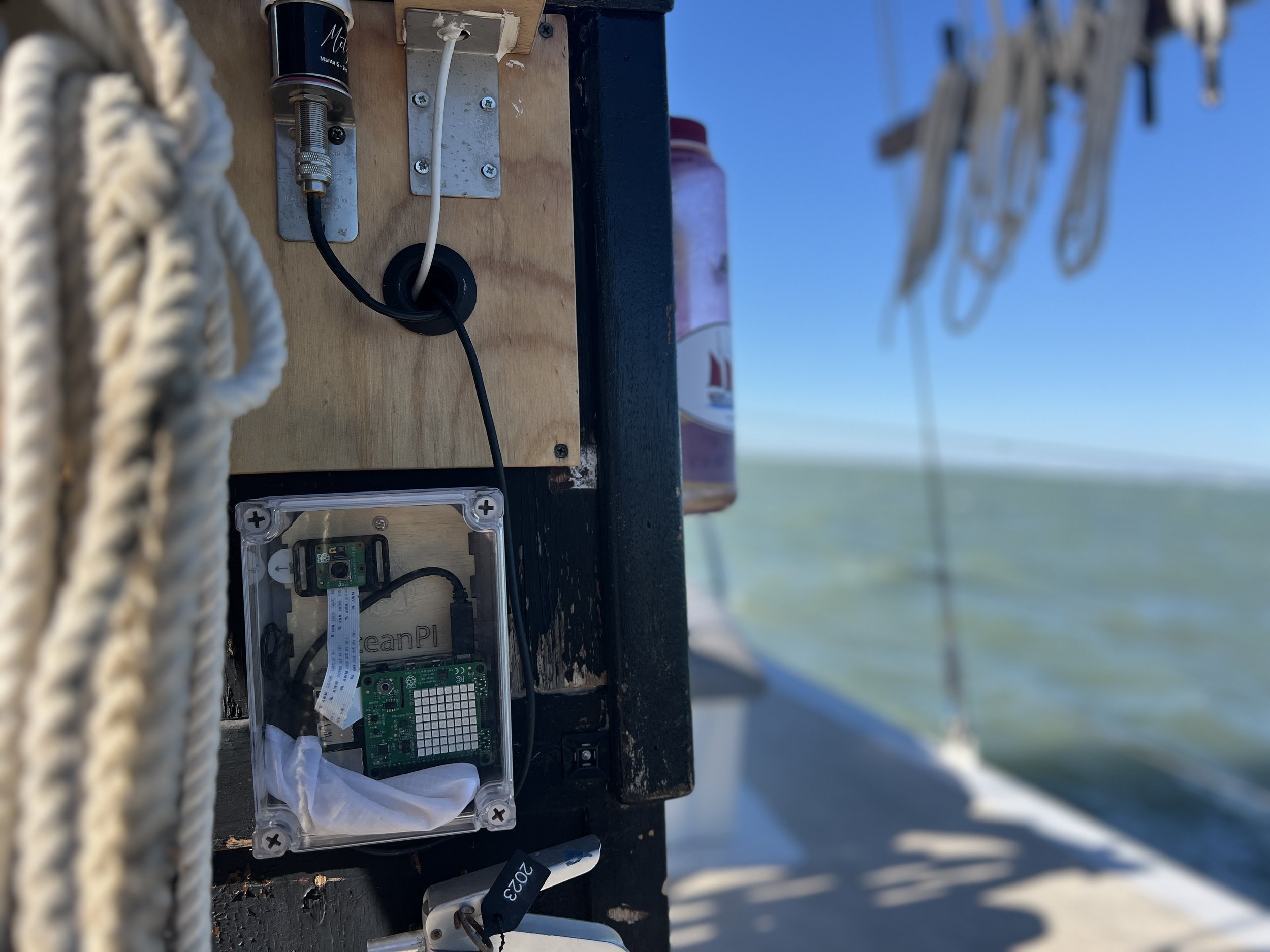
To enable easy cross-over for Astro Pi fans to Ocean Pi, we designed our Sense HAT Station to be as close to the Astro Pi device as possible. The Sense HAT Station is a Raspberry Pi 5 with a Sense HAT and Pi camera installed.
What is a Sense HAT you ask? It is a small computer board that includes sensors for atmospheric pressure, humidity, temperature, color, orientation, and movement. It has an 8x8 LED matrix and even a tiny joystick.
Learn more about the Sense HAT here and find a great introductory project here.
Our Installations
We have installed two Sense HAT Stations board Wonder and one at Slocum Cove Marina on the campus of Northeast Maritime Institute. Two of these are identical to the Astro Pi installations and use 3D printed versions of the Astro Pi Flight Case. The second Sense HAT station on Wonder is installed on deck, which required us to design a waterproof case that would still allow atmospheric exposure for the sensors.
Projects For You
Mission Zero, which was created by Astro Pi. We can run this same project aboard Wonder.
Animate a Creature, which is an expansion of Mission Zero that uses the motion of the ship to animate your creature, creating a custom GIF that we send back to you.
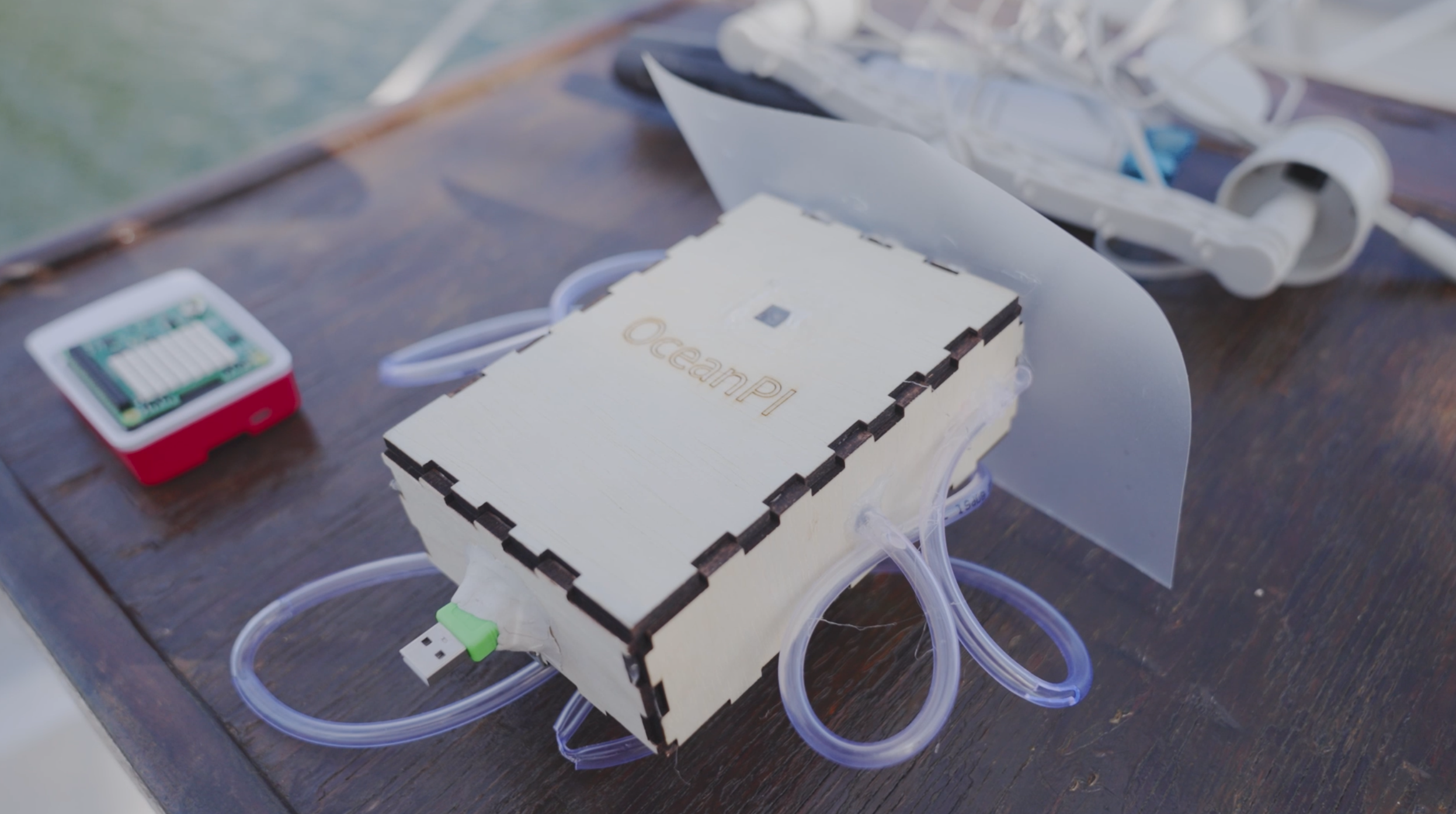
Build Your Own Sense HAT Station. Create a replica of our weather-resistant outdoor case.
Weather Station
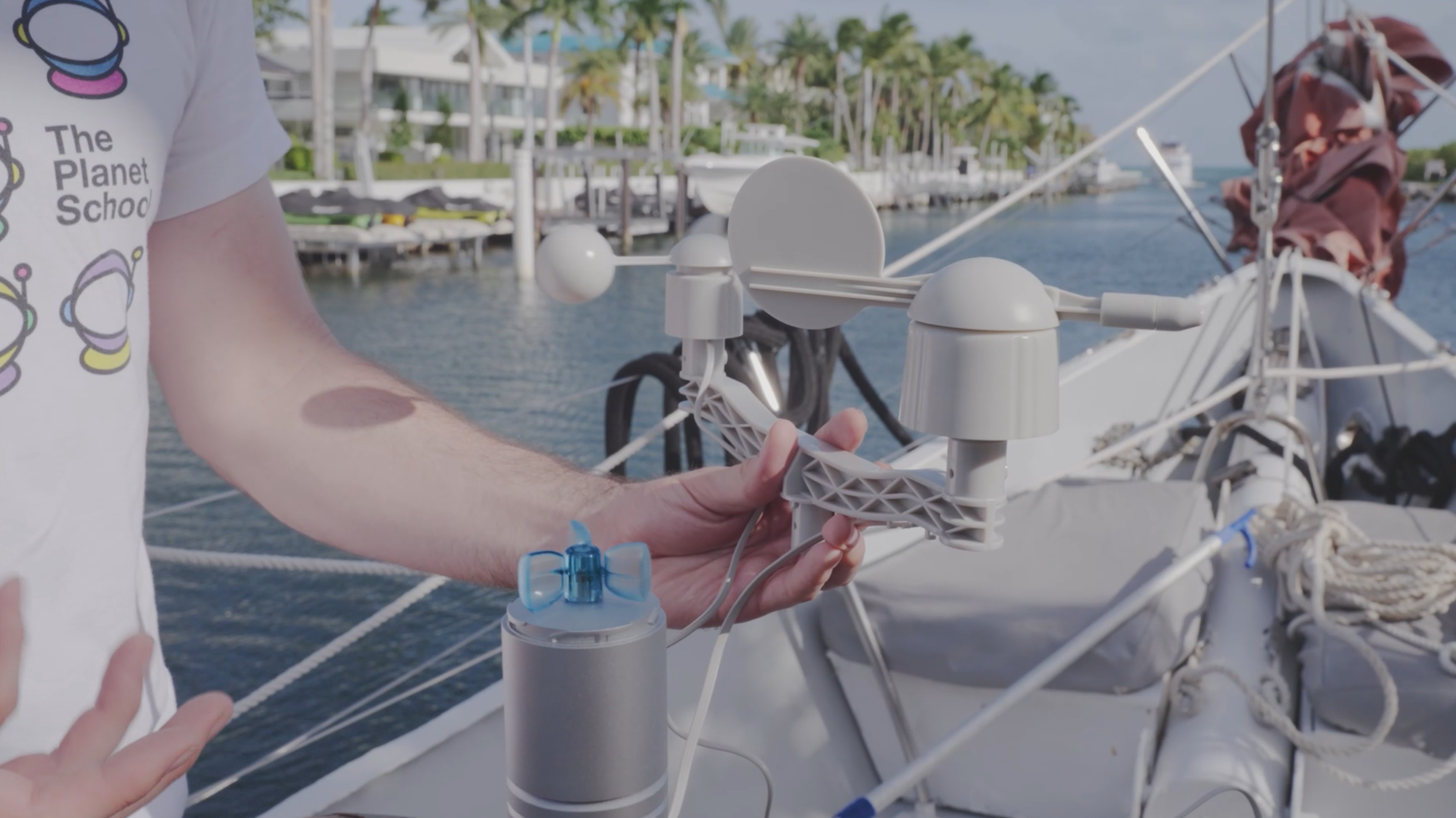
Increasing in complexity from the Sense HAT Station, the Weather Station works with individual sensors instead of the pre-built “all-in-one” nature of the Sense HAT. This includes air temperature, humidity, and color sensors like we had on the Sense HAT but adds on wind direction, wind speed, rain, CO2, air quality, an UV light. It also features wide-angle cameras that can be used to detect different cloud formations, weather patterns, sunrise, and sunset. Finally, it has a screen for displaying its data at the station.
Since our Weather Station is installed outdoors, it also needs a weather-proof case that shields the Raspberry Pi and other electronics while still allowing air flow over the sensors themselves. The Weather Station is installed on a stationary building, so it uses a normal power source and relies on wifi for broadcasting its data.
Our Installations
Once our prototypes are complete, we plan to install a Weather Station at the Voyaging Institute dock in Key West and Northeast Maritime Institute’s Slocum Cove Marina in Fairhaven, MA.
A weather station will also be installed aboard Voyaging Institute vessels that includes additional cameras to better capture the conditions of the ship.
Projects For You
Build Your Own Weather Station (in progress). We will share instructions once we have finished our design process.
More projects will be announced once the weather station is built and installed.
Follow our progress here.
Ocean Buoy
Gathering data about the ocean is difficult because the ocean is a harsh environment. Electronics and salt water do not get along. Additionally, if we want to move away from the shore then we cannot rely on plugging our Raspberry Pi into an outlet or using wifi to transmit data. Therefore, we set to work to design an Ocean Buoy that was powered by solar panels and uses cellular data to transmit data.
The Ocean Buoy features a rich array of industry-grade sensors from Atlas Scientific that measure water temperature, salinity (through electrical conductivity), oxygen reduction potential, dissolved oxygen, and pH. In addition, we added sensors for turbidity, humidity, air temperature, air pressure and motion to measure wave action. The buoy will also monitor its power usage, power generation, and track its location. Finally, we added an underwater AI-powered camera to detect fish.
Our Installations
Once our prototypes are complete, we plan to install an Ocean Buoy at the Voyaging Institute dock in Key West and Northeast Maritime Institute’s 2 acre kelp and oyster farm in Nasketucket Bay near Fairhaven, MA.
Additionally, a modified and expanded version of the Ocean Buoy will be installed aboard Wonder. A tall ship sensor system shares many of the same design challenges as the Ocean Buoy.
Projects For You
Build Your Own Ocean Buoy. We will share instructions once we have finished our design process.
More projects will be announced once the buoys themselves are built and installed.
Follow our progress here.